It is a common myth that heat pumps “dry out” the air more than other heating systems. In reality, a heat pump in heating mode does not have a combustion process or a flame that consumes moisture. The “dry air” sensation you feel is actually a result of Relative Humidity (RH) physics: as the heat pump raises the temperature of the air, that air’s capacity to hold water increases, causing the percentage of humidity to plummet. If your home has even minor air leaks, cold, dry outdoor air is pulled in, making the problem worse.
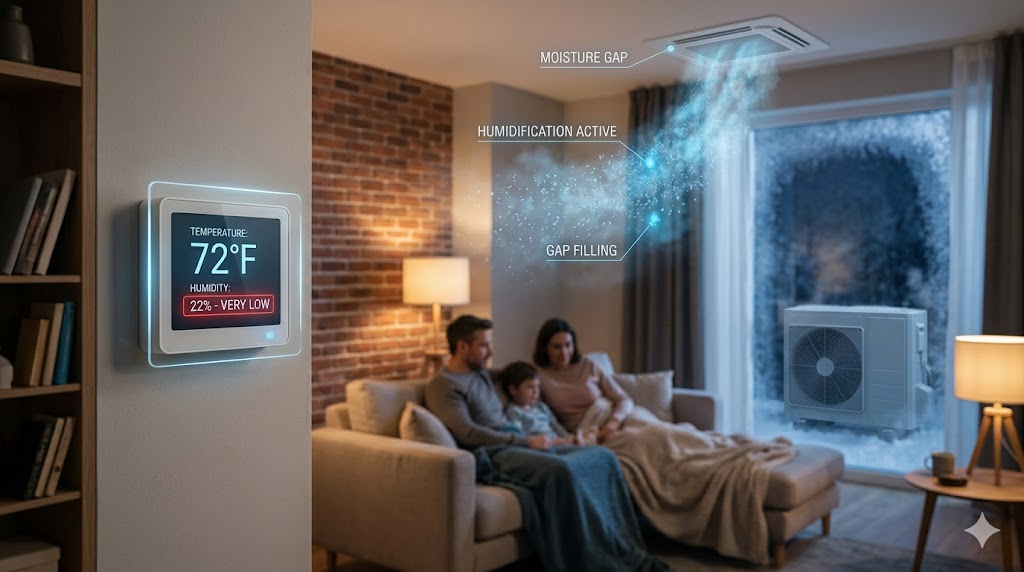
While you don’t “need” a humidifier for the heat pump to function, you likely need one for your own biological health. Low humidity leads to static shocks, cracked wood furniture, and irritated respiratory passages. However, because heat pumps produce “cooler” heat (typically 90°F – 100°F) compared to a gas furnace (120°F+), choosing the wrong type of humidifier can lead to standing water and mold in your ducts.
To see if your home requires a specialized steam or bypass humidifier, use the Winter Humidity Gap Auditor below.
Do you need a humidifier for the heat pump?
Yes, it would help if you had a humidifier for your heat pump. Heat pumps absorb heat from outdoor air and transfer them inside to heat indoor spaces, which may make the indoor air dry, and sometimes this may lead to dry and itchy skin, sore throat, or cough. Installing a humidifier will encourage the circulation of quality breathable air around your building.
Can you install a humidifier on a heat pump?
Yes, you can install a humidifier on a heat pump. Having a humidifier installed on your heat pump will help to ameliorate the possible effect of breathing dry air. However, there’s a downside to installing a manual humidifier on your heat pump: they can supply uncontrolled humidity into your home. Hence, you may have to be setting the humidity time after time.
How to install a humidifier on a heat pump
- Turn off the heat pump.
- Cut a hole that will fit the size of the humidifier on the heat pump using a steel cutter.
- Position the humidifier on the orifice and secure the humidifier.
- Use a supply line to connect the exhaust of the heat pump to the humidifier intake.
- Connect the humidifier to the water and turn on the water.
- If you are using the humidifier attached to the intake line, your heat pump should be connected to the valve on the right.
- Set the humidistat above the heat pump, then supply power through it from the humidifier.
What is an advantage to adding humidity to heated air?
Improved Health
Airborne viruses thrive mostly in dry air, which is why cold and flu germs are rampant in the winter seasons. An adequate supply of humidity to your indoor spaces will make the environment unconducive to airborne diseases.
💡 Pro Diagnostic Tip: If your “dry air” symptoms persist even with a humidifier, you might be confusing dry air with particulate irritation. Excessive dust or mold spores can mimic the feeling of a dry throat. Cross-reference your symptoms with our Heat Pump Health & Air Quality Audit to rule out biological contaminants.
Year-round comfort
Generally, dry air is common during winter, which is why people experience uncomfortable symptoms like bloody or dry noses more during this period. With the unhindered supply of humidity to your building, you will continue to breathe in quality air regardless of the season.
It saves energy and money
With your room already filled up with dry air due to the constant transfer of heat by your heat pump, adding moisture to the air will provide you with extra comfort and help you save energy.
What are the disadvantages of adding a humidifier to a heat pump?
- If not properly installed, it can encourage the growth of mold.
- Routine maintenance will become necessary.
- They are usually costlier than potable humidifiers.
- It can only be installed by professionals, which means additional cost.
- They are non-mobile: they cannot be moved to other locations.
💡 Pro Diagnostic Tip: Adding a humidifier to a duct system requires precision. If the humidity is set too high (above 50%), the moisture can condense inside the dark ductwork, creating an ideal breeding ground for fungus. Use our Heat Pump Mold Risk Auditor to ensure your new comfort settings aren’t creating a biological hazard.
Does a heat pump reduce humidity?
Yes, a heat pump reduces humidity. Just as an air conditioner can effectively remove excess moisture from the air, a heat pump can also drastically reduce humidity in indoor spaces. A heat pump does this during the cooling cycle by getting rid of excess moisture through condensation.
Does a heat pump cause dry air?
Yes, a heat pump causes dry air. A typical heat pump can remove moisture from the air through condensation. This can cause the air circulating within the building to dry. The most interesting part of it is that even with the constant supply of heat, you may not feel any warmer.
What type of humidifier works well with a heat pump?
There are several humidifiers you can use together with your heat pump to future enhance their efficiency level. The list below contains 4 possible options.
- Aprilaire Humidifier
- Carrier performer steam humidifier (best used with air source heat pump).
- Carrier bypass humidifier
- Carrier fam-powered humidifier.
Do heat pumps dry the air in the winter?
Yes, heat pumps dry out the air during winter. During winter, homeowners rely on heat pumps for the much-needed heat. A heat pump does this by transferring heat from the outdoor air to indoor spaces. By doing this, moisture is removed from indoor air causing the air to dry out.
Where do you put the humidifier in your house?
In a bedroom, you can place your humidifier on a table or nightstand. Make sure not to put the humidifier on a bare floor or in a corner. And also, ensure that there is at least 3 feet distance between you and the humidifier if it will be standing next to you in your bedroom.
In the living room, place the humidifier on a table that is at least 3 feet tall and make sure it is sitting on an absorbent towel.
Do you need a humidifier with an air conditioning system?
Yes, you need the humidifier for your air conditioner. Both air conditioners and heat pumps can work as a dehumidifier but not as a humidifier. They can only either heat or cool your room. During the heating cycle, both remove excess moisture making the air dry. A humidifier will help to restore the lost humidity, thereby improving the quality of air in circulation.