Whether a massive thunderstorm is rolling in, or you are standing in your yard with a garden hose wanting to wash away layers of dirt, a very logical question arises: Can an aircon compressor get wet without electrocuting the system or breaking the motor?
The short answer is yes. Your outdoor air conditioner (the condenser unit) is explicitly engineered to withstand rain, snow, and extreme weather. The internal compressor is hermetically sealed in steel, and the electrical connections are heavily shielded from falling water. In fact, a gentle rainstorm actually helps your system run more efficiently by washing away light dust from the aluminum fins.
However, there is a massive difference between falling rain and pressurized water or flooding. Hitting your unit with a pressure washer, or letting it sit in standing floodwater, will cause thousands of dollars in permanent damage.
Before you attempt to clean your unit or panic about the weather, use our Interactive Water Risk Assessor below. Select the type of water exposure your AC is facing to instantly see the safety rating and the proper action plan.
What kind of water is your outdoor unit exposed to?
Electrical Dangers and Standing Water
If your yard has flooded and the water level reached the side-panel of your AC unit, do not turn it on. Submerged electrical components like the run capacitor will short circuit. A blown capacitor is the number one reason why an AC compressor suddenly stops working and requires immediate professional replacement.
Ice vs. Water
While liquid water from a hose is fine, frozen water is a massive problem. If you notice a block of ice forming on your outdoor unit’s pipes, do not try to melt it with hot water, as the thermal shock will crack the lines. Instead, follow our strict Safe Defrost Protocol to thaw the system without causing catastrophic damage.
Is the AC compressor waterproof?
Yes, the compressor of an AC unit is waterproof. The compressor, as well as some other components like the fan, and the condenser coil that makes up the outdoor unit of your AC are engineered with either copper, metal, or aluminum so that they can tolerate adverse weather and keep your house cool and dehumidified under such condition.
Is it ok if my air conditioner get wet?
Yes, it is ok if your air conditioner gets wet. Sometimes, the outdoor unit of your air conditioner may get wet either accidentally by rain or you may deliberately get it all wet while trying to spritz it with water to get it cleaned. Whichever way you might have gotten your air conditioner wet, be rest assured that wetness is a normal occurrence when it comes to cooling, and therefore, you don’t have to worry about any electrical or mechanical parts of your air conditioner getting damaged.
We strongly recommend you read our previous guide. You will learn how to protect ac outdoor unit from rain.
Is it ok if for a window-type aircon to get wet?
Yes, it is ok if your window-type aircon gets wet as they are less likely to be affected by it. The same applies to a central air conditioner as well. Most people use a window-type air conditioner to cool small spaces within the home because they are easily maintained and usually cheap. However, during heavy downpours, there may be some wetness issues or hear window ac water sound.
Although water may not affect your air conditioner, when they are not properly installed, rain can get inside your house and cause great damage to your flooring, walls, and decors.
Can water damage the AC compressor?
No, water cannot damage an AC compressor. The materials used in making your AC compressor are waterproof, hence the reason why they hardly get spoiled when exposed to excessive water. However, don’t get me wrong though, I only say they are waterproof and not condensed proof.
It is now becoming a common habit among homeowners to use AC compressor cover for their unit, which is very wrong because condensation causes more damage to an air conditioner than water. This is especially true for homeowners that use a central air conditioning system. In a central air conditioning system, you will find the compressor on a pad next to the building. It will be connected with the furnace with copper and electrical lines.
When you have your compressor covered with an airtight cover, condensation will start to form within the compressor. When condensation starts to form, liquid droplets will start to form within the cabinet, relay, and fan which will lead to corrosion. Therefore, you should refrain from covering your unit unless it is stated otherwise in your compressor manual. Give it enough breathing space, allow good air in, and keep moisturized air out.
On the other hand, you can safely cover your window air conditioner to prevent drafts from getting into the house. If it is not possible to have it sealed or covered from the outside, you should have it safely covered from the inside.
What will happen if the aircon compressor gets wet?
Apart from rainwater or the water sprayed while trying to get your unit cleaned, the compressor while also running generates a large amount of water. This water is gotten from squeezing the surrounding air the compressor takes into the system. If such water is left in such amount in the system for a long time, it can affect the system as well as every other component attached to the compressed air system.
This will cause piping rust, this rust will blend in with the compressor oil as well as every other dirt, brought into the system through the compressor’s inlet. This mixture will create a sticky mess capable of blocking the pneumatic circuitry or staining the fine coating of the surfaces. Also, since the compressed air system environment is rich in oxygen, it is only a matter of time before microbes start to flourish within the piping because they can easily be free of the organic material.
Will the aircon compressor leak water?
Yes, your aircon compressor can leak water. Air compressor leaks can occur both externally and internally. External leaks are commonly seen around the compressor condenser, connectors, evaporators, hoses, shaft seal, and O-rings. These should be your major focus areas when you are looking for possible leaks in your compressor. Similarly, you can also watch out for the following signs of air conditioner air compressor leakage.
- When your electricity bill becomes higher than usual.
- When your compressor makes too much hissing sound.
- The supply vent of your air conditioner produces warm air.
- Your air conditioner now takes more than enough time to cool off the building.
- When ice buildup is becoming more noticeable on your AC’s copper refrigerant lines.
Does homeowners insurance cover water damage from air conditioner? It depends. Please refer to our previous guide for more info.
How do you repair a leaking air conditioner compressor?
You can easily fix a leaking air conditioner compressor by uncovering your compressor and spraying the inner chamber with a leak sealant. You can get the leak sealant from an auto part store and must be applied according to instructions.
Is water leaking from air conditioner dangerous? Yes, you should fix it as soon as possible.
Can we wash the AC compressor with water?
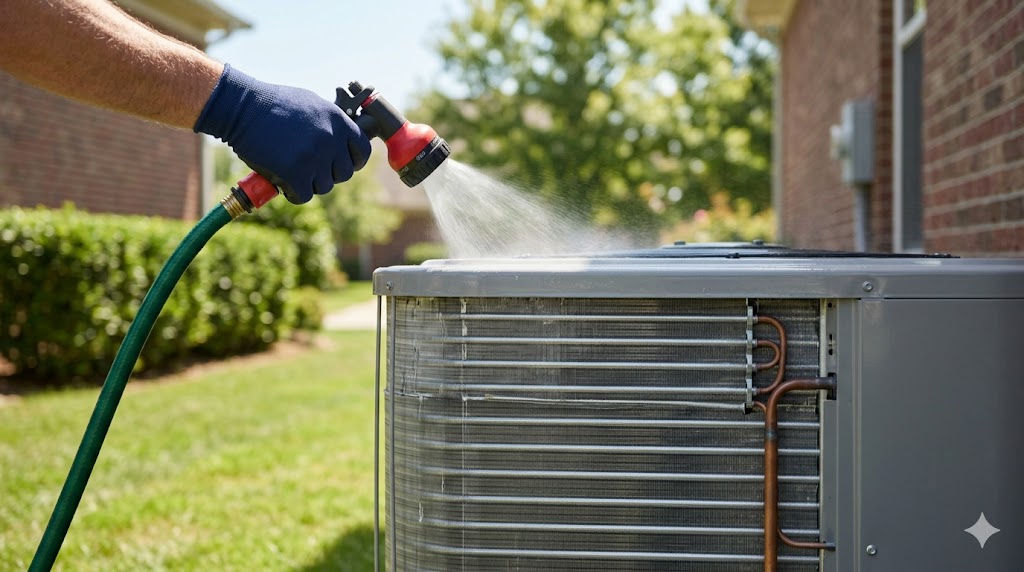
Can i spray water on my ac unit? Yes, you can wash your AC compressor with water. However, for safety purposes, make sure all electric wires and motors are covered with plastic before you proceed.
Are you curious to know does aircon use water or can you use aircon water for plants?